
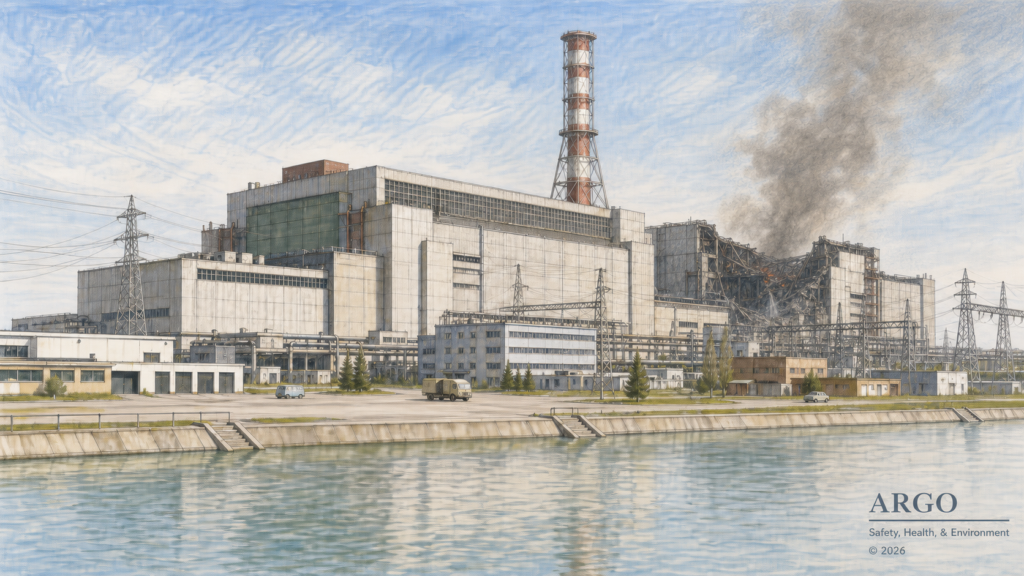
When the Safety System Increased the Danger
At 1:23 a.m. on April 26, 1986, operators at the Chernobyl Nuclear Power Plant began a test intended to determine whether a slowing turbine could briefly power essential equipment after a loss of electricity. Within seconds, Reactor 4 surged out of control. Explosions destroyed the reactor and released radioactive material across Ukraine, Belarus, Russia, and much of Europe.
Two workers died from injuries at the plant. Of 134 workers and firefighters who developed acute radiation syndrome, 28 died within three months. Approximately 116,000 people were relocated from affected communities during 1986.
Chernobyl’s central leadership lesson reaches far beyond nuclear power: a safeguard cannot protect people when its hazards are poorly understood, critical information is withheld, and the organization depends on operators to overcome unsafe design.
What Happened
Reactor 4 was an RBMK-1000, a Soviet-designed reactor that used graphite to sustain the nuclear reaction and water to cool the fuel. Under certain conditions, boiling water created steam bubbles—called voids—that increased reactor power instead of reducing it. This positive void effect could make the reactor unstable, particularly at low power.
After the test was delayed, reactor power fell far below the planned level. Operators withdrew many control rods and continued the test at approximately 200 megawatts thermal. The reactor was operating with little safety margin in a condition that had not been adequately studied.
When the test began, coolant flow decreased and more steam formed in the core. Power started to rise. An operator pressed the emergency shutdown button, sending the control rods into the reactor.
But the shutdown system contained a critical design flaw. The graphite sections at the ends of the rods displaced neutron-absorbing water as they first entered the core. For several seconds, the system intended to stop the reaction added reactivity in the lower core. The resulting power surge ruptured fuel channels, generated extreme pressure, and destroyed the reactor.
More Than Operator Error
The first official explanations placed most of the blame on the operating crew. Later investigations changed that assessment.
The International Atomic Energy Agency’s INSAG-7 report concluded that operator actions contributed to the event, but it shifted substantial emphasis to the reactor’s physical characteristics, control-rod design, safety systems, and the broader regulatory framework. Some dangerous RBMK behavior had been observed before Chernobyl, yet the information was not effectively shared with plant operators and did not lead to adequate corrective action.
Procedures did not clearly communicate the significance of the operating limits. Important reactor conditions were not conveniently displayed, and engineered protections did not reliably prevent entry into an unstable state. The organization placed too much responsibility on people without giving them the information and systems needed to succeed.
That is not defense in depth. It is dependence on perfect human performance.
What Leaders Should Learn
First, leaders must understand how critical safeguards behave under abnormal conditions. Emergency systems should fail safely across the operating range. Assumptions must be tested, and known limitations must be visible to decision-makers.
Second, serious warning information must travel. Earlier events and design discoveries provided opportunities to recognize the danger. When lessons remain inside technical groups, separate facilities, or management channels, the organization has not learned.
Third, operating limits require clear meaning and firm consequences. Workers should understand why a limit exists and what action is required when conditions move outside it. A Stop Work Obligation must be backed by equipment, procedures, and leadership decisions that make stopping the expected response.
Finally, leaders should resist explanations that end with the person closest to the event. Human error matters, but it often reveals deeper weaknesses in design, training, supervision, information sharing, and regulatory oversight.
The ARGO SH&E Perspective
Chernobyl demonstrates what happens when technical hazards, operating decisions, and organizational weaknesses align. Effective SH&E leadership makes critical risks visible, verifies that safeguards work under credible conditions, and ensures that lessons lead to action before another team faces the same danger.
ARGO SH&E helps organizations evaluate critical controls, operating limits, emergency systems, and leadership accountability. If you want a practical review of the safeguards protecting your operation, contact ARGO SH&E.
Authoritative Sources
- International Atomic Energy Agency, The Chernobyl Accident: Updating of INSAG-1 (INSAG-7)
- United Nations Scientific Committee on the Effects of Atomic Radiation, “The Chornobyl Accident”
- Chernobyl Nuclear Power Plant, “Accident and Its Elimination”
- World Health Organization, “Radiation: The Chernobyl Accident”