ARGO SH&E specializes in developing scalable and customized Safety, Health, and Environment (SH&E) programs for growing companies. These programs not only ensure compliance but also cultivate a strong safety culture that evolves with the business, providing a foundation for long-term sustainability and success.
Under the leadership of Bryan Hoggan, a certified Safety and Health expert with over 30 years experience, ARGO SH&E provides strategic, high-level insights. Ensuring excellence by fostering strong safety cultures and boosting team member engagement. With a focus on results-driven solutions, they help businesses thrive in today’s SH&E environment.
ARGO SH&E takes a hands-on approach, working closely with companies to build custom-fit solutions. From designing tailored safety programs to recruiting the right professionals, we ensure businesses have the tools for long-term success. Our approach supports both compliance and a lasting culture of SH&E innovation.
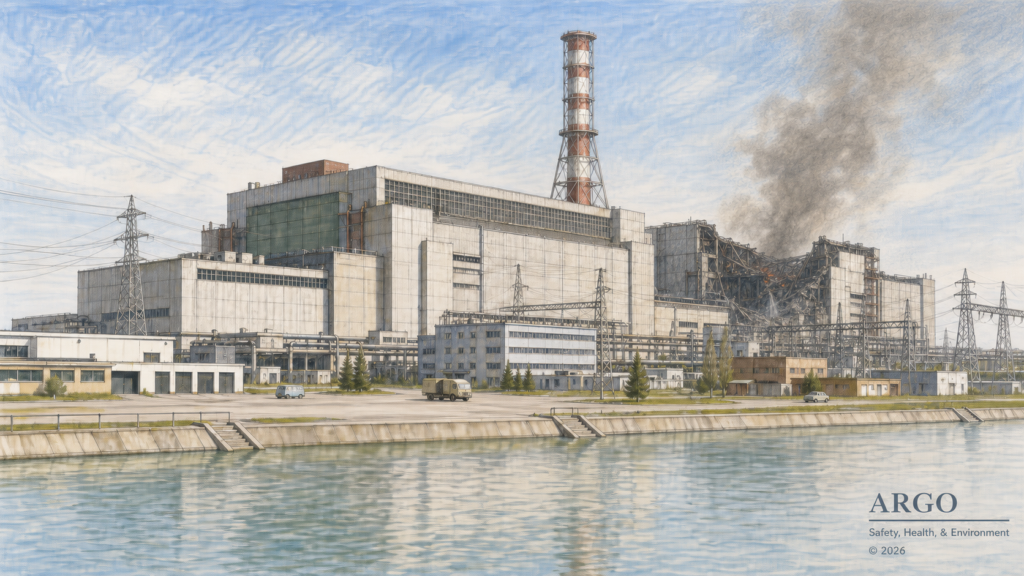
When the Safety System Increased the Danger At 1:23 a.m. on April 26, 1986, operators at the Chernobyl Nuclear Power Plant began a test intended to determine whether a slowing turbine could briefly power essential equipment after a loss of electricity. Within seconds, Reactor 4 surged out of control. Explosions destroyed the reactor and released […]
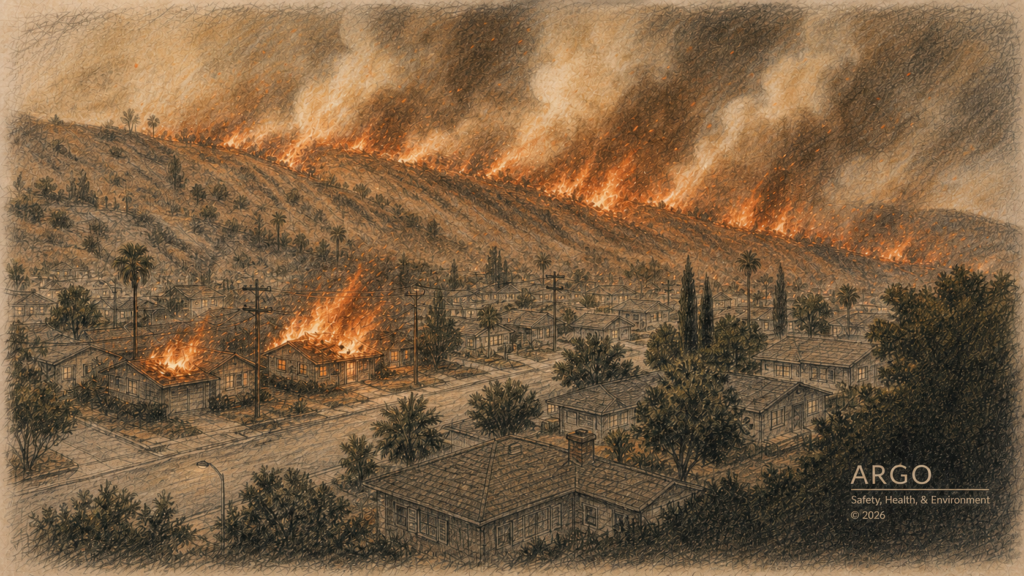
Preparedness Has to Work Under Pressure On January 7, 2025, extreme winds and dry conditions drove multiple wildfires across the Los Angeles region. The Palisades and Eaton fires became the most destructive. Together, they burned more than 37,000 acres, destroyed more than 16,000 structures, and claimed 31 lives. Entire neighborhoods were devastated, businesses were displaced, […]
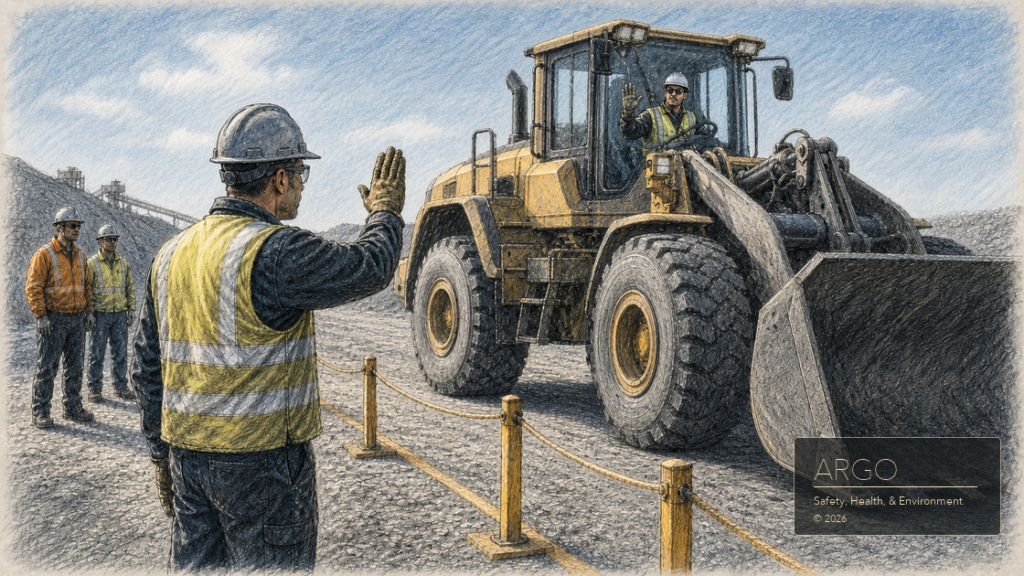
The Useful Challenge Behind a Provocative Phrase “Safety First” may be the most familiar slogan in the workplace. Mike Rowe, host of Dirty Jobs, has spent years challenging it with a deliberately uncomfortable alternative: “Safety Third.” The phrase is not a recommendation to accept preventable injuries or move safety behind production. Its value is that […]
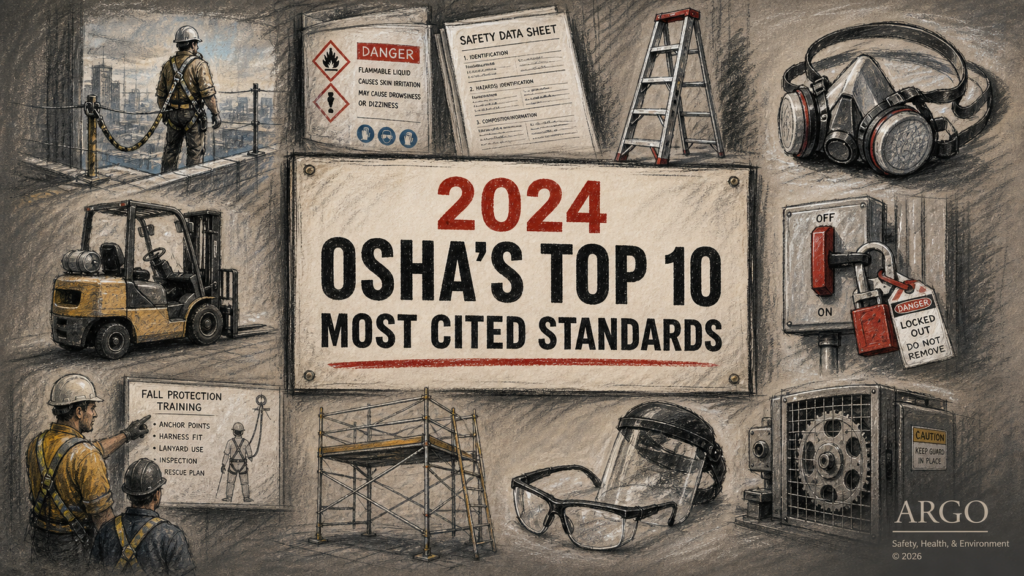
Familiar Hazards, Persistent Weaknesses OSHA’s most frequently cited standards for fiscal year 2024 tell a familiar story. Fall protection again led the list, followed by hazard communication, lockout/tagout, ladders, and respiratory protection. The standards may be familiar, but the lesson is not simply that employers need more compliance activity. It is that common hazards continue […]
On November 12, 2024, at approximately 3 p.m., a devastating explosion occurred at the Givaudan Sense Colour factory in Louisville, Kentucky. The blast resulted in the tragic deaths of two employees and left eleven others injured, some critically. The explosion caused a partial collapse of the facility and inflicted significant damage on nearby homes and […]
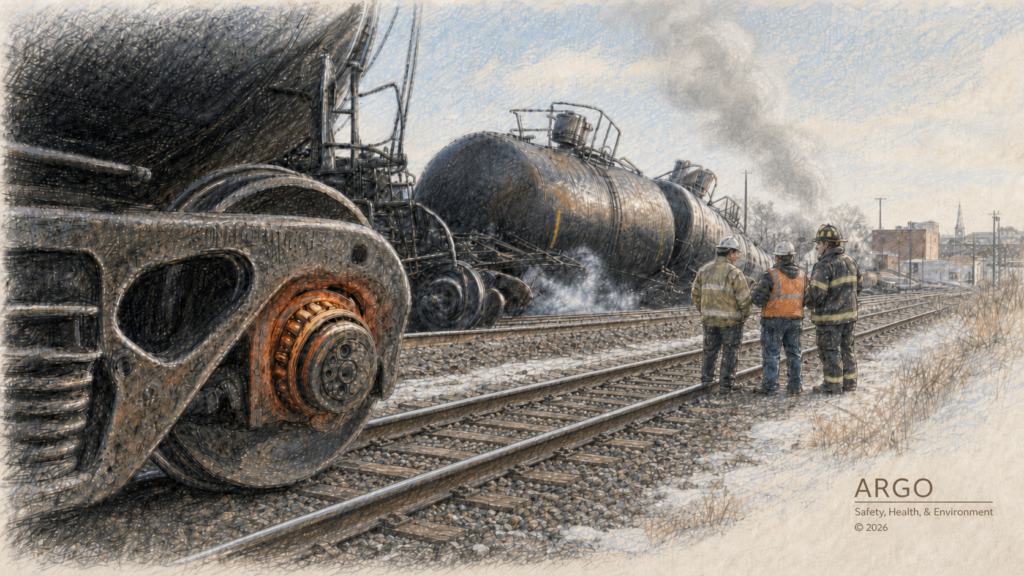
When a Warning Comes Too Late On February 3, 2023, a Norfolk Southern freight train derailed in East Palestine, Ohio. Thirty-eight railcars left the track, including 11 tank cars carrying hazardous materials. Fires followed, residents were evacuated, and a community became the center of a long and difficult environmental response. The derailment began with the […]
In 1987, Alcoa, a leading aluminum manufacturer, faced significant challenges, including declining profits and operational inefficiencies. The appointment of Paul O’Neill as CEO marked a pivotal moment in the company’s history. O’Neill’s unconventional strategy centered on a singular focus: worker safety. The Safety First Approach Upon assuming leadership, O’Neill addressed investors with a surprising declaration: […]
When Isolation Exists Only on Paper On October 23, 1989, routine maintenance at the Phillips 66 Houston Chemical Complex in Pasadena, Texas, became one of the nation’s deadliest petrochemical disasters. Twenty-three workers were killed and more than 130 were injured. The central lesson is straightforward: when people open process equipment, isolation must be physically dependable. […]
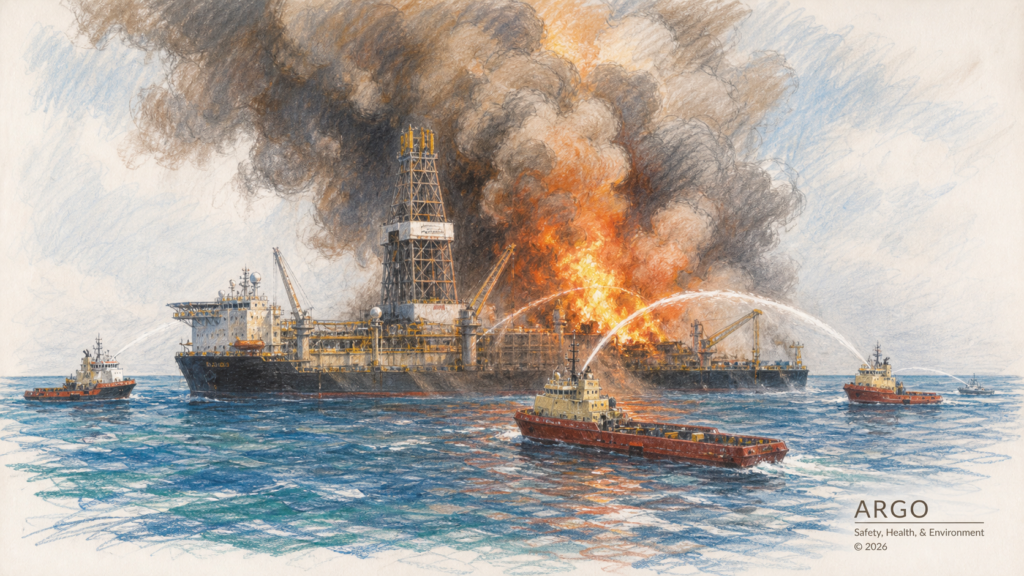
When Multiple Barriers Fail On April 20, 2010, the Deepwater Horizon mobile offshore drilling unit suffered a blowout while completing BP’s Macondo well approximately 40 miles off the Louisiana coast. Hydrocarbons reached the rig, ignited, and caused explosions and a fire that killed 11 workers and injured 17. The vessel sank two days later. Oil […]
When Safety Systems Exist Only on Paper During the night of December 2–3, 1984, a runaway chemical reaction inside methyl isocyanate (MIC) storage Tank 610 at the Union Carbide India pesticide plant released a toxic cloud over Bhopal. The vapor moved beyond the plant and into nearby neighborhoods while people slept. The World Health Organization […]
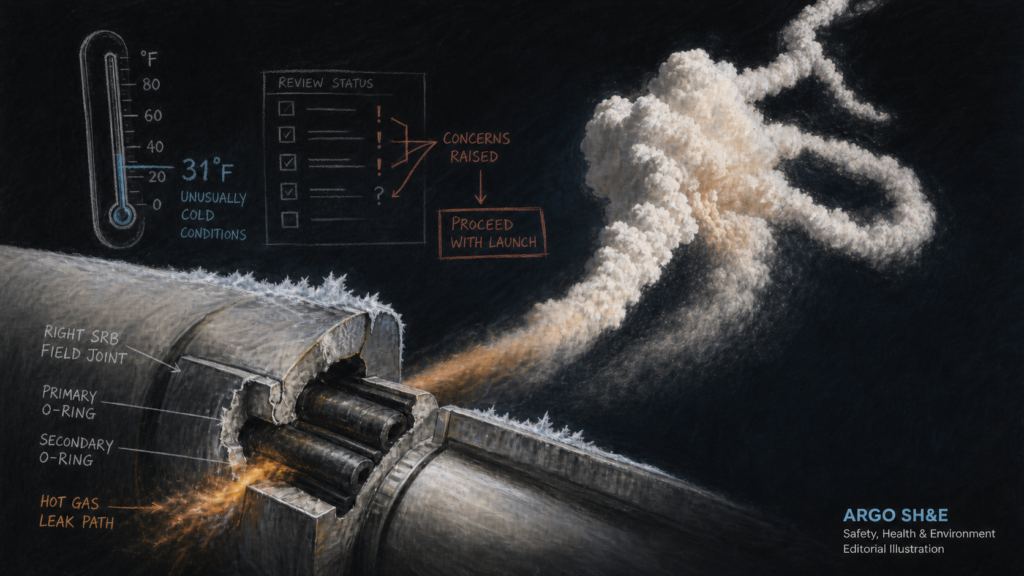
When Warnings Are Not Enough On January 28, 1986, Space Shuttle Challenger lifted off from Kennedy Space Center. Just 73 seconds later, the shuttle broke apart, killing all seven crew members. The physical cause was a failed rubber seal, known as an O-ring, in the right solid rocket booster. But Challenger was more than an […]
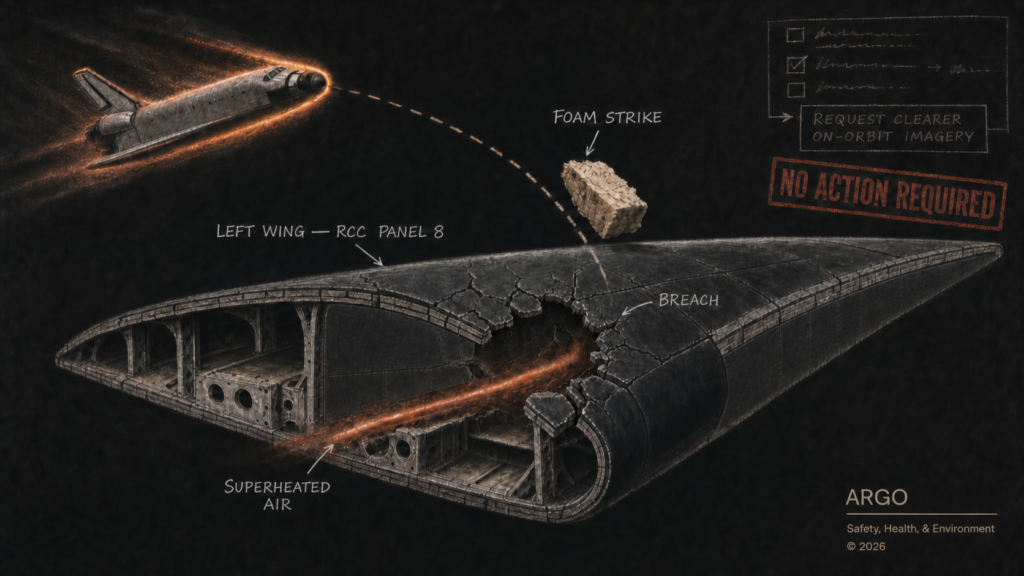
When Familiar Problems Stop Looking Dangerous On February 1, 2003, Space Shuttle Columbia broke apart during reentry, killing all seven crew members. The physical cause began 16 days earlier, during launch, when insulating foam separated from the external tank and struck the leading edge of Columbia’s left wing. The foam created a breach near Reinforced […]
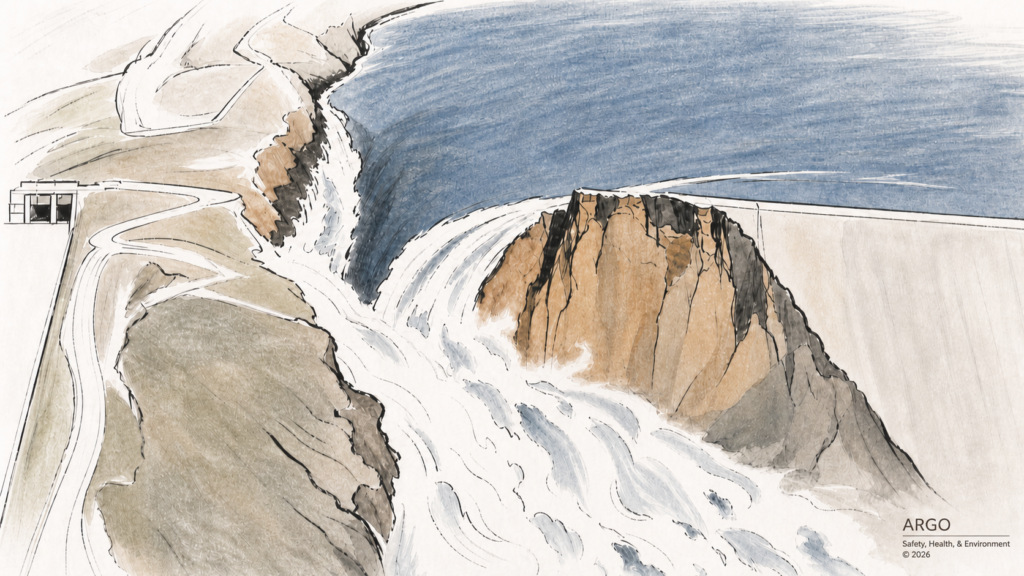
The Dam That Failed on Its First Filling On June 5, 1976, the newly completed Teton Dam in southeastern Idaho failed while its reservoir was being filled for the first time. The collapse sent a massive flood through Wilford, Sugar City, Rexburg, and other downstream communities. Eleven people died, and losses were estimated at approximately […]
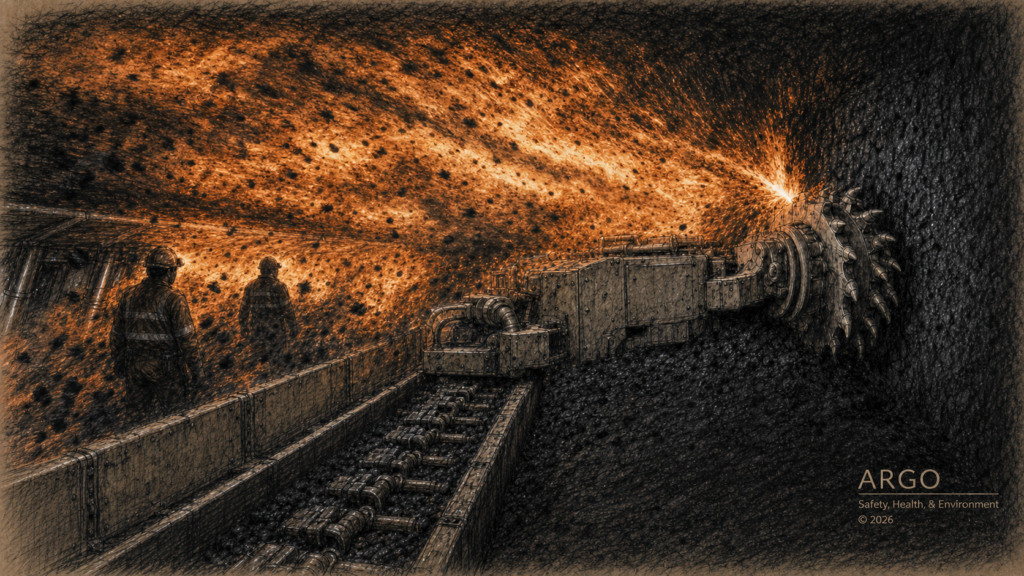
When Critical Controls Fail On April 5, 2010, an explosion tore through the Upper Big Branch Mine-South near Montcoal, West Virginia. Twenty-nine miners were killed, and two others were injured. The disaster was the deadliest U.S. coal-mine accident in nearly four decades. It was also preventable. The Mine Safety and Health Administration found that the […]
Piper Alpha: The Pump That Should Not Have Been Started At about 10 p.m. on July 6, 1988, operators on the Piper Alpha platform in the North Sea started a standby condensate pump. They did not know that its pressure safety valve had been removed for maintenance. Condensate escaped, ignited, and set off the first […]
The Texas City Disaster: A Tragic Legacy On April 16, 1947, the industrial port city of Texas City, Texas, experienced one of the deadliest industrial disasters in American history. The incident began when the French ship SS Grandcamp, loaded with approximately 2,300 tons of ammonium nitrate fertilizer, caught fire while docked at the port. Despite […]